MCC Panels

Food & Beverage

Washdown-rated panels (IP65+), MCC, VFD, APFC, PLC, soft starters, harmonic filters
Food & Beverage

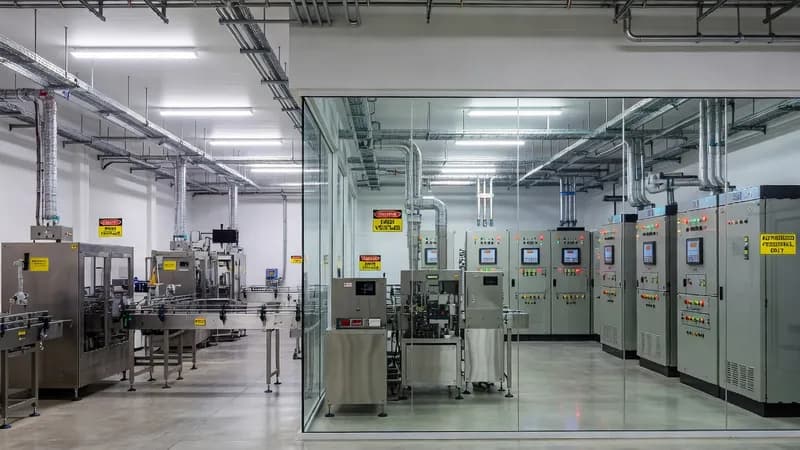
Food and beverage plants demand low-voltage switchgear and controlgear assemblies that combine hygienic design, reliable process continuity, and strict electrical safety. Panels are commonly specified as stainless steel or coated mild steel enclosures with IP65, IP66, or higher protection to withstand washdown, foam cleaning, condensation, flour dust, sugar dust, and corrosive vapors from acids, salts, and cleaning chemicals. In production halls, ambient temperatures may vary from chilled storage zones to hot cookrooms, so thermal management and anti-condensation measures such as filtered ventilation, thermostatic heaters, and cabinet air conditioners are essential to maintain component life and prevent nuisance trips. A typical food and beverage electrical architecture includes a main distribution board, motor control center, variable frequency drive panel, power factor correction panel, PLC automation panel, soft starter panel, metering panel, harmonic filter panel, and custom engineered panels for process skids or packaging lines. Main incomers often use ACBs up to 6300 A or MCCBs up to 1600 A, with outgoing feeders protected by MCCBs, MCBs, contactors, motor starters, and protection relays. For large pumps, compressors, mixers, conveyors, and agitators, soft starters reduce inrush current and mechanical stress, while VFDs provide precise speed control for fillers, bottling lines, pumps, and conveyor synchronization. Where non-linear loads are significant, passive harmonic filters or active solutions are used to control THDi and comply with plant power quality targets under IEC 61000. IEC 61439-1 and IEC 61439-2 govern the design verification and performance of assemblies such as MCCs, MDBs, APFC panels, and VFD panels, while IEC 61439-3 may apply to distribution assemblies intended for ordinary persons and IEC 61439-6 to busbar trunking systems in production facilities. Component selection follows IEC 60947 for ACBs, MCCBs, contactors, motor starters, overload relays, and switching devices. In areas with flammable vapors, dust, or special processing zones, equipment may require additional consideration of IEC 60079 for explosive atmospheres and IEC 61641 for internal arcing containment in low-voltage assemblies. Form of separation, typically Form 2, Form 3, or Form 4, is selected to improve maintainability and limit the effect of a fault between functional units. Hygienic engineering is equally important. Cable entry, gland plates, slopes, drip edges, smooth surfaces, and minimized horizontal ledges help prevent contamination and simplify cleaning. Door-mounted HMI units, PLC IO modules, VFDs, and meters are arranged to separate wet and dry zones where possible, while stainless steel fasteners and corrosion-resistant busbar systems improve long-term durability. Typical applications include dairy processing, beverage bottling, brewing, meat and poultry plants, bakeries, frozen food facilities, and edible oil production. In each case, the control panel must support traceability, batch control, energy monitoring, and downtime reduction while meeting the electrical, environmental, and hygiene expectations of modern food manufacturing operations.

Panel Types for This Industry

Main Distribution Board (MDB)

Main Distribution Board (MDB) assemblies engineered for Food & Beverage applications, addressing industry-specific requirements and compliance standards.

Motor Control Center (MCC)

Motor Control Center (MCC) assemblies engineered for Food & Beverage applications, addressing industry-specific requirements and compliance standards.

Variable Frequency Drive (VFD) Panel

Variable Frequency Drive (VFD) Panel assemblies engineered for Food & Beverage applications, addressing industry-specific requirements and compliance standards.

Power Factor Correction Panel (APFC)

Power Factor Correction Panel (APFC) assemblies engineered for Food & Beverage applications, addressing industry-specific requirements and compliance standards.

PLC & Automation Control Panel

PLC & Automation Control Panel assemblies engineered for Food & Beverage applications, addressing industry-specific requirements and compliance standards.

Metering & Monitoring Panel

Metering & Monitoring Panel assemblies engineered for Food & Beverage applications, addressing industry-specific requirements and compliance standards.

Soft Starter Panel

Soft Starter Panel assemblies engineered for Food & Beverage applications, addressing industry-specific requirements and compliance standards.

Harmonic Filter Panel

Harmonic Filter Panel assemblies engineered for Food & Beverage applications, addressing industry-specific requirements and compliance standards.

Custom Engineered Panel

Custom Engineered Panel assemblies engineered for Food & Beverage applications, addressing industry-specific requirements and compliance standards.

Frequently Asked Questions

For washdown areas in food and beverage plants, IP65 and IP66 are the most common specifications, with higher ratings used when direct high-pressure cleaning or harsh chemical exposure is expected. The enclosure choice must also suit corrosion risk, so stainless steel is often preferred over painted steel in dairy, meat, and beverage processing. IP protection should be verified as part of the complete assembly design, not just the empty enclosure. Under IEC 61439-1 and IEC 61439-2, the panel builder must ensure the assembly maintains its declared protection, temperature rise performance, and mechanical integrity after wiring and component installation.
The core assembly standard is IEC 61439-1/2 for low-voltage switchgear and controlgear assemblies such as MCCs, VFD panels, MDBs, APFC panels, and PLC panels. Individual components inside the panel should comply with IEC 60947 series requirements for circuit-breakers, contactors, overload relays, and motor starters. If the panel serves a distribution role for ordinary persons, IEC 61439-3 may be relevant. For busbar trunking systems feeding production lines, IEC 61439-6 applies. Where the process area includes potentially explosive dust or vapor hazards, IEC 60079 becomes important, and IEC 61641 may be specified for internal arcing protection.
VFDs and soft starters are widely used because they improve process control and reduce mechanical stress on equipment. VFDs are ideal for conveyors, pumps, mixers, fillers, and packaging machines where speed control, energy efficiency, and synchronization are important. Soft starters are common for large motors driving compressors, agitators, and pumps because they limit starting current and reduce torque shock to couplings, gearboxes, and product handling systems. In a hygienic plant, smoother starts also help prevent product spillage and reduce wear on washdown-rated mechanical systems. Proper coordination of these devices with protection relays, MCCBs, and contactors is essential under IEC 60947 and IEC 61439 design verification.
Yes, often they do. Food and beverage plants frequently use multiple VFDs, rectifier-based power supplies, and UPS systems, which can increase harmonic distortion and affect transformers, generators, and sensitive PLC or metering circuits. Harmonic filter panels, either passive or active, are used to improve power quality and reduce heating in cables and transformers. They help the installation meet internal engineering limits and compatibility requirements aligned with IEC 61000 electromagnetic compatibility practices. In facilities with large chilled water plants, compressors, or high-speed packaging lines, harmonic mitigation can improve uptime, reduce nuisance trips, and protect precision instrumentation.
Stainless steel is typically the preferred enclosure material for washdown food plants because it resists corrosion from water, detergents, sanitizers, and food acids. Grade selection depends on the environment: 304 stainless is common for general applications, while 316 stainless is often chosen in more aggressive or coastal environments. For less severe areas, powder-coated mild steel may be acceptable if properly protected, but it is usually not the first choice for direct washdown zones. Regardless of material, the panel should be designed with hygienic features such as sloped tops, smooth surfaces, gasket continuity, and minimized dirt traps. These details complement IEC 61439 compliance and practical food safety requirements.
Temperature control is critical because food facilities can include cold rooms, hot process areas, and frequent washdown cycles that create condensation. Panel builders typically use thermostatically controlled space heaters, filtered fan units, heat exchangers, or cabinet air conditioners depending on the ambient conditions and internal heat loss. VFDs, APFC capacitors, and PLC power supplies generate heat that must be managed to remain within component limits defined by IEC 60947 and assembly thermal performance requirements under IEC 61439-1/2. Anti-condensation strategies are especially important in refrigerated zones, where moisture can damage terminals, relays, IO modules, and communication devices.
Short-circuit ratings depend on the upstream supply, transformer size, and installation type, but food and beverage switchboards are commonly designed with prospective short-circuit withstand levels ranging from 25 kA to 50 kA, and higher in larger industrial plants. The exact rating must be verified by the panel builder through IEC 61439 design verification, including busbar withstand, protective device coordination, and enclosure integrity. ACBs and MCCBs are selected with appropriate breaking capacities under IEC 60947 to ensure the assembly can safely interrupt fault currents. For critical process lines, selective coordination is often used to limit downtime and keep only the affected feeder out of service.
Yes. PLC automation panels are central to batch control, recipe management, traceability, alarm handling, and equipment interlocking in food manufacturing. They often integrate PLC IO modules, HMI terminals, network switches, safety relays, and communication gateways for packaging lines, fillers, CIP systems, and warehouse automation. When properly engineered, they support compliance with digital recordkeeping and plant quality systems, including FDA 21 CFR Part 11 where applicable, as well as internal food safety procedures. From an electrical standpoint, the panel should be designed to IEC 61439 requirements, with EMC practices aligned to IEC 61000 to protect communication and control reliability in noisy production environments.

Ready to Engineer Your Next Panel?

Our team of electrical engineers is ready to design, build, and deliver your custom panel solution — fully compliant with international standards.