MCC Panels

Oil & Gas

Ex-rated panels, MCC, PCC, VFD, generator control, soft starters, ATEX/IECEx compliance
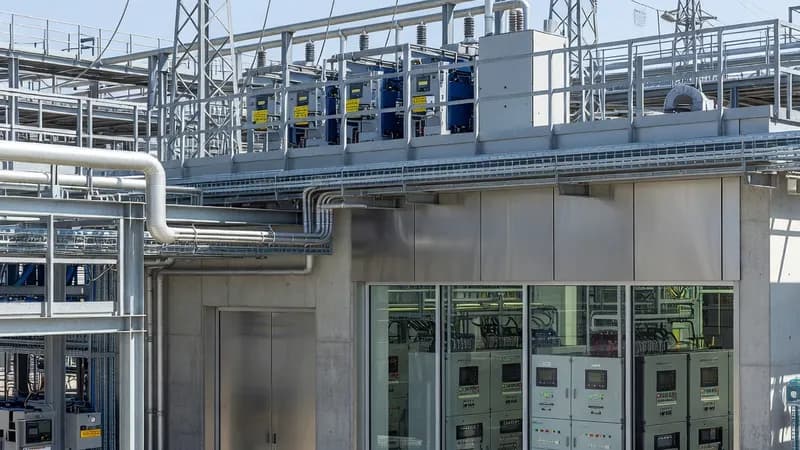
Oil & Gas

Oil & gas electrical systems demand panel assemblies that remain safe, maintainable, and highly available under hazardous, corrosive, and often remote operating conditions. For upstream production sites, midstream compressor stations, LNG plants, refineries, tanker terminals, and offshore platforms, MCC panels, PCCs, VFD panels, generator control panels, and PLC automation panels are typically engineered to IEC 61439-1 and IEC 61439-2, with functional units designed around documented temperature rise, dielectric withstand, and short-circuit performance. Depending on the application, assemblies may include ACBs for incomer and bus-tie duties, MCCBs for feeder protection, protection relays for selective coordination, soft starters for pumps and compressors, and VFDs for variable-torque loads such as fans, seawater pumps, and process skids. Typical current ratings range from compact feeder sections at 250 A to main switchboards and PCCs exceeding 6300 A, with short-circuit ratings commonly specified from 36 kA up to 100 kA at 415 V or 690 V, subject to the fault level study and utility interface. Hazardous area requirements drive the enclosure strategy. In Zone 1/2 gas and Zone 21/22 dust locations, equipment may be built as Ex p pressurized panels, Ex e increased-safety enclosures, or installed in safe-area shelters with intrinsically safe interfaces. Compliance with ATEX and IECEx is essential, and equipment selection must consider gas group, temperature class, ingress protection, and surface temperature limits. For offshore and marine-adjacent installations, additional constraints from marine classification and corrosion resistance are critical, including stainless steel enclosures, C5-M coatings, anti-condensation heaters, space heaters, and tropicalization of PLC I/O modules and control relays. Where arc event exposure is a concern, design verification to IEC 61641 supports internal arc withstand considerations in LV switchgear rooms and power centers. A typical oil and gas MCC integrates fixed or withdrawable motor starters, VFD bypass arrangements, motor protection relays, and local/remote control interfaces for pumps, compressors, separators, and package skids. Generator control panels support diesel gensets, black start sequences, synchronizing, load sharing, and automatic transfer schemes for critical utilities. Metering panels and main distribution boards provide revenue or process energy monitoring, power quality logging, and feeder visibility for EPC and operator maintenance teams. Soft-starter panels are commonly used where reduced mechanical stress and inrush limitation are required, especially for large water injection pumps, fire pumps, and cooling towers. Panel builders should verify conformity not only to IEC 61439-2 for power switchgear assemblies but also to IEC 61439-1 for general rules, and IEC 61439-6 when busbar trunking is part of the distribution architecture. Component coordination must align with IEC 60947 series devices, including ACBs, MCCBs, contactors, overload relays, motor starters, and protection relays. In critical installations, segregation by forms of internal separation, typically Form 2b, Form 3b, or Form 4, helps improve maintainability and reduce outage scope during service. For oil and gas customers, the ideal solution is often a custom-engineered panel system that combines hazardous-area compliance, high short-circuit capacity, reliable thermal management, and intuitive operator access for safe long-term operation.

Panel Types for This Industry

Main Distribution Board (MDB)

Main Distribution Board (MDB) assemblies engineered for Oil & Gas applications, addressing industry-specific requirements and compliance standards.

Power Control Center (PCC)

Power Control Center (PCC) assemblies engineered for Oil & Gas applications, addressing industry-specific requirements and compliance standards.

Motor Control Center (MCC)

Motor Control Center (MCC) assemblies engineered for Oil & Gas applications, addressing industry-specific requirements and compliance standards.

Variable Frequency Drive (VFD) Panel

Variable Frequency Drive (VFD) Panel assemblies engineered for Oil & Gas applications, addressing industry-specific requirements and compliance standards.

Generator Control Panel

Generator Control Panel assemblies engineered for Oil & Gas applications, addressing industry-specific requirements and compliance standards.

Metering & Monitoring Panel

Metering & Monitoring Panel assemblies engineered for Oil & Gas applications, addressing industry-specific requirements and compliance standards.

PLC & Automation Control Panel

PLC & Automation Control Panel assemblies engineered for Oil & Gas applications, addressing industry-specific requirements and compliance standards.

Soft Starter Panel

Soft Starter Panel assemblies engineered for Oil & Gas applications, addressing industry-specific requirements and compliance standards.

Custom Engineered Panel

Custom Engineered Panel assemblies engineered for Oil & Gas applications, addressing industry-specific requirements and compliance standards.

Frequently Asked Questions

The core standard is IEC 61439-1 for general rules and IEC 61439-2 for power switchgear and controlgear assemblies such as PCCs, MCCs, VFD panels, and generator control panels. If busbar trunking is included, IEC 61439-6 also applies. Device-level coordination typically follows IEC 60947 for ACBs, MCCBs, contactors, and motor starters. For hazardous areas, ATEX and IECEx requirements govern the equipment type and installation method, while IEC 61641 is commonly referenced for internal arc considerations. In oil and gas projects, these standards are usually applied together with project-specific specifications, temperature rise limits, and short-circuit verification based on the declared fault level.
Ex p pressurized panels are appropriate when electrical equipment must be installed in a Zone 1 or Zone 2 hazardous area but cannot practically be certified as a flameproof or increased-safety solution. They are widely used for MCCs, VFD panels, analyzer shelters, and PLC cabinets near process units. The enclosure is purged and maintained at a protective overpressure to prevent flammable gas ingress. The design must satisfy ATEX/IECEx requirements, including purge control, pressure monitoring, alarm functions, and often automatic shutdown or disconnection logic. This approach is common on offshore platforms, compressor stations, and refineries where maintenance access and equipment density are major concerns.
An oil and gas MCC is typically designed for harsher environmental and regulatory conditions than a standard industrial MCC. It often requires higher corrosion resistance, better thermal management, hazardous-area compatibility, and more rigorous documentation. Typical features include withdrawable motor starters, VFD feeders, motor protection relays, space heaters, and Ex p or safe-area segregation strategies. In many cases, the assembly must be verified to IEC 61439-2 for short-circuit strength and temperature rise, with components selected from IEC 60947 categories. Offshore and petrochemical applications may also require marine classification acceptance, C5-M coatings, and enhanced ingress protection.
The most critical components are ACBs for incomers and bus couplers, MCCBs for outgoing feeders, protection relays for selective coordination, metering devices for energy and power quality, and control components for generator automation. Generator control panels often include synchronizing relays, load sharing modules, automatic voltage regulators interfaces, and PLC I/O modules. In PCCs, busbar sizing, interlocking, and fault-clearing performance are key. For oil and gas sites, these panels are often built with redundant control supplies, heater circuits, and remote monitoring interfaces to maintain uptime in demanding process and utility systems.
VFD panels are used to control pumps, fans, compressors, and process auxiliaries where energy efficiency, soft starting, and precise speed control are required. In oil and gas plants, VFDs may be installed in safe areas, in ventilated rooms, or inside Ex p pressurized enclosures if located near hazardous zones. The panel design must address harmonic distortion, cooling, bypass strategy, EMC, and cable termination methods. Depending on the motor and duty cycle, engineers may specify line reactors, output filters, or active harmonic mitigation. Compliance with IEC 61439-2 and component rules under IEC 60947 remains essential for dependable operation.
Forms of internal separation such as Form 2b, Form 3b, and Form 4 are commonly selected for oil and gas switchboards to limit fault propagation and support maintenance without shutting down the entire assembly. Form 2b separates busbars from functional units, while Form 3b and Form 4 provide greater segregation between feeders and terminals. The choice depends on criticality, maintainability, and available space. For refineries, LNG terminals, and offshore utility rooms, higher forms of separation are often preferred because they reduce downtime and improve operational safety during troubleshooting or component replacement.
Short-circuit ratings are specified from the system fault level at the installation point, not by guesswork. The panel builder must verify the assembly’s conditional and unconditional short-circuit withstand using IEC 61439 methods, while the protective devices must be coordinated under IEC 60947. In oil and gas installations, common LV assembly ratings range from 36 kA to 100 kA at 415 V or 690 V, depending on transformer size, generator contribution, and network impedance. Proper coordination of ACBs, MCCBs, busbars, and protective relays is essential to keep the assembly safe under fault conditions and to limit arc and thermal damage.
Offshore and coastal installations usually need stainless steel or heavily coated steel enclosures, high ingress protection, anti-condensation heaters, sunshades, and tropicalized components. Salt mist, vibration, humidity, and temperature cycling can shorten service life if not addressed at design stage. Panels may also require marine classification compliance, secure cable glands, stainless hardware, and segregated compartments for control electronics. For hazardous areas, these features are combined with ATEX/IECEx certification strategies such as Ex p pressurization or safe-area installation. The result is a panel assembly capable of long-term service in corrosive and vibration-prone environments.

Ready to Engineer Your Next Panel?

Our team of electrical engineers is ready to design, build, and deliver your custom panel solution — fully compliant with international standards.