Preventive Maintenance Guide for Industrial Panels
Maintenance schedules and procedures for panel assemblies.
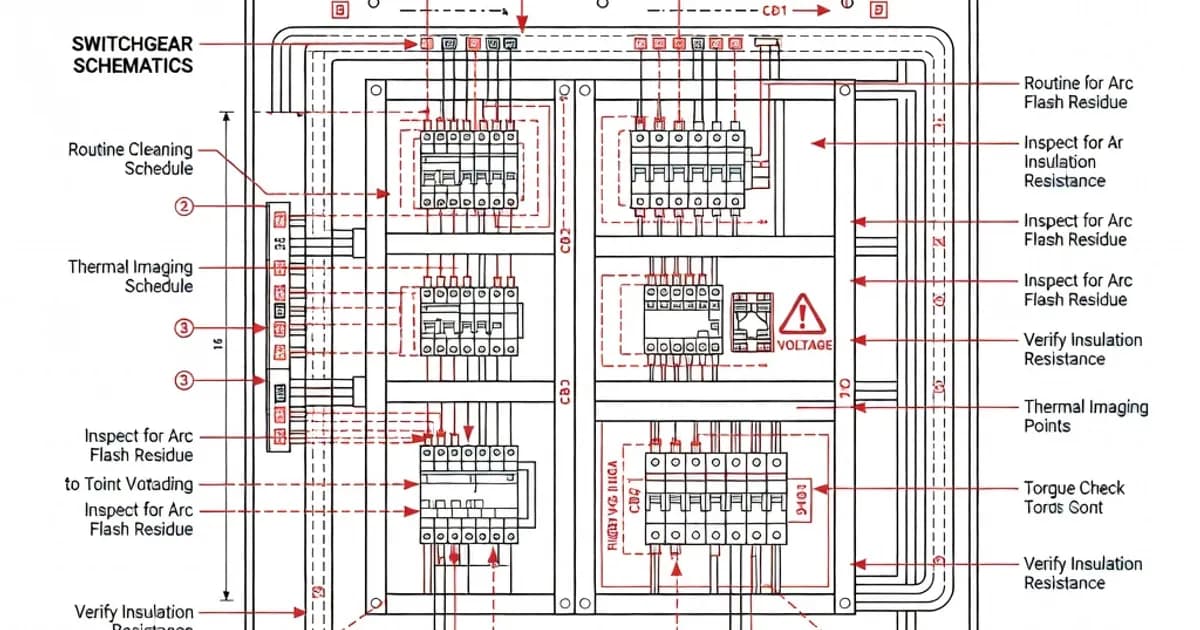
Preventive Maintenance Guide for Industrial Panels
Preventive maintenance for industrial panels is not just a housekeeping exercise. In low-voltage switchgear and controlgear assemblies, it is a core safety and reliability activity that preserves temperature performance, mechanical integrity, protective continuity, and the degree of protection after years of service, modification, and handling. Under IEC 61439, the assembly manufacturer must provide instructions for safe operation, inspection, and maintenance, and routine checks must confirm that the assembly still performs as designed after installation and throughout its service life. As documented in IEC 61439 guidance materials, the most important maintenance focus areas are temperature rise, connection tightness, internal separation, protective circuits, and IP integrity.
This guide explains how preventive maintenance aligns with IEC 61439, what to inspect, how modular assemblies improve service continuity, and which checks matter most in real industrial environments. It is written for switchboards, motor control centers, distribution boards, and other low-voltage power switchgear and controlgear assemblies, especially PSC assemblies covered by IEC 61439-2.
Why Preventive Maintenance Matters Under IEC 61439
IEC 61439 treats an assembly as a verified system, not just a collection of components. That means maintenance must preserve the conditions used to verify the design. If a panel is modified, transported, expanded, or repeatedly opened for service, the original verification assumptions can be undermined. Per IEC 61439-1 Clause 10.10, temperature rise limits must remain within the lower of the component manufacturer’s limits or 70 K for accessible external surfaces and relevant internal conditions, while routine maintenance must identify hotspots caused by loose or degraded terminations. As noted in industry guidance from ABB, GAMBICA, and BEAMA, thermal issues are one of the most common failure mechanisms in aging LV assemblies.
Preventive maintenance is also important because assemblies are expected to support continuity of service where specified. IEC 61439-1 and IEC 61439-2 Clause 11 address arrangements that permit maintenance without full shutdown, such as removable or withdrawable functional units with clear connected, test, isolated, and move positions. This is particularly relevant in process plants, utilities, data centers, and manufacturing lines where an outage can cost far more than the maintenance itself.
Key IEC 61439 Maintenance Principles
The maintenance approach should preserve four fundamental properties: thermal performance, mechanical integrity, protective continuity, and accessibility for safe service. Per IEC 61439-1 Clause 9, exposed conductive parts larger than 50 x 50 mm must remain connected to the protective circuit, and removal of parts must not interrupt the protective path. Clause 10.7 addresses mechanical strength, including the ability of the assembly to withstand handling and lifting stresses. Clause 10.10 covers temperature rise verification, while Clause 11 covers continuity of service and maintenance capability.
In practical terms, this means every preventive maintenance visit should verify that conductors remain secure, protective earth continuity is intact, moving parts operate smoothly, and internal barriers and IP features still function after any intervention. If a component is removed or a drawer is withdrawn, the assembly must still preserve shock protection and the safe condition of adjacent live parts.
| IEC 61439 Topic | Clause | Maintenance Focus | Practical Check |
|---|---|---|---|
| Temperature rise | IEC 61439-1 Clause 10.10 | Prevent overheating and terminal deterioration | Inspect for discoloration, hot smell, loose lugs, signs of insulation aging |
| Mechanical strength | IEC 61439-1 Clause 10.7 | Ensure the enclosure and fixings remain structurally sound | Check mounting hardware, door alignment, hinges, lifting points, transport damage |
| Protective circuits | IEC 61439-1 Clause 9 | Maintain PE continuity across all accessible conductive parts | Verify bonding links, PE terminations, conductor identification, torque settings |
| Continuity of service | IEC 61439-1 / -2 Clause 11 | Enable safe maintenance without full shutdown where specified | Check withdrawn/test/isolated positions, padlocking, interlocks, labels |
| Degree of protection | IEC 60529 | Preserve IP rating after cable entry changes or repairs | Inspect gland plates, seals, doors, vents, and unused openings |
Temperature Rise, Hotspots, and Connection Integrity
Temperature rise is one of the most important indicators of panel health. Per IEC 61439-1 Clause 10.10, the assembly must not exceed the applicable temperature rise limits established by the standard and by component manufacturer data. In practical maintenance work, the most common source of excess heating is mechanical loosening at terminals, busbar joints, and device connection points. Thermal cycling, vibration, and load variation all contribute to gradual loosening over time.
Routine inspections should therefore include visual checks for brown or blackened insulation, warped plastic parts, discolored lugs, melted cable ties, and any odor of overheated insulation. A thermographic scan is often the most effective non-intrusive method for identifying incipient failures under load. If an abnormal hotspot is found, de-energization, torque verification, and connection refurbishment should follow. Industry guides from GAMBICA and BEAMA consistently emphasize that connection quality is central to preventing thermal failure.
As a rule, torque checks should be performed using the component manufacturer’s specified values and methods. Do not assume that a tight-feeling connection is correctly torqued. Many industrial failures begin as microscopic movement at the interface between conductor and terminal, which increases resistance and accelerates heating. Once a joint is heat-damaged, retightening alone may not restore its original performance.
For assemblies verified by design rules rather than repeat testing, maintenance records should confirm that modifications have not changed the thermal basis of the original verification. Per IEC 61439 guidance, some multi-compartment assemblies can be assessed by calculation up to 1600 A when the construction remains within the verified design envelope. That makes documentation control an essential part of preventive maintenance.
Mechanical Integrity, Handling, and Lifting Checks
Industrial panels are exposed to more mechanical stress than many operators realize. Even if the assembly is stationary, it may be subjected to transport shock, uneven floor loading, repeated door cycling, vibration from nearby equipment, or strain from cable terminations. IEC 61439-1 Clause 10.7 addresses mechanical strength, including the lifting and handling requirements used during verification. Guidance material notes a test approach involving 1.25 times shipping weight, lifting to 1 m, and maintaining the suspended condition for 30 minutes in order to confirm structural integrity.
From a preventive maintenance perspective, that means the enclosure frame, base, lifting eyes, anchoring, and internal supports should be checked for deformation, cracked welds, loose fasteners, and door misalignment. A misaligned door may appear cosmetic, but it often indicates deeper structural movement that can affect IP protection, interlocking, and switchgear alignment. Assemblies that have been moved, relocated, or expanded should always be rechecked after reinstallation.
If removable parts or drawers are present, check that insertion and withdrawal remain smooth and that mechanical stops, locking devices, and guides are intact. Damaged rails or jammed motion can compromise both safe service and equipment availability. In modular systems, mechanical wear is not a minor issue; it can prevent safe isolation and lead to improper connection states.
Protective Circuits and Earthing Continuity
Per IEC 61439-1 Clause 9, the protective circuit must remain continuous even when parts are removed. That requirement is especially important in assemblies with removable functional units, internal barriers, or modular service sections. Any accessible exposed conductive part larger than 50 x 50 mm must be bonded to the protective circuit, and the PE path must remain effective across all service positions.
Preventive maintenance should therefore include a careful check of PE conductors, bonding straps, earthing bars, and terminal security. Conductor identification should remain clear and consistent, with green-yellow used for protective earth conductors. Where applicable, verify that terminals are correctly labeled and that the PE termination has not been disturbed by later additions or field modifications. Loose protective earth connections are a serious defect because they may not affect normal operation but can create life-threatening fault conditions.
In panels with detachable subassemblies, confirm that protective continuity is maintained in all positions, especially when parts are isolated, withdrawn, or removed for servicing. The protective circuit must not depend on accidental contact or a single fragile mechanical connection. This is a fundamental IEC 61439 principle and should be checked after every significant intervention.
Continuity of Service and Safe Maintenance Positions
One of the major strengths of modern IEC 61439-compliant panel design is continuity of service. Clause 11 addresses assemblies intended to allow maintenance or modification while preserving supply to the rest of the installation. This is typically achieved with withdrawable modules, compartmentalization, padlocking, interlocks, and clearly defined positions such as connected, test, isolated, and move.
ABB’s MNS low-voltage switchgear system is a well-known example. Its module positions are clearly marked and support controlled withdrawal and maintenance access. In practice, these positions reduce the need for full shutdown and improve safety during routine service. Similar modular concepts are used across the industry, including systems from Siemens, Schneider Electric, and Eaton, where withdrawable components allow fault isolation without de-energizing the entire board.
During maintenance, verify that:
- position indicators are visible and correct,
- padlocks and mechanical interlocks function as intended,
- the test and isolated positions provide true separation from live power circuits,
- labels match the actual equipment state, and
- adjacent live compartments remain adequately protected.
Safe maintenance capability is not only about hardware. It also depends on procedures. A panel can be technically withdrawable but still unsafe if operators bypass interlocks, ignore marking, or fail to verify the isolation state before work begins.
Degree of Protection, Seals, and Environmental Control
Panel enclosures must preserve their degree of protection after routine service, cable changes, and upgrades. IEC 60529 defines the IP rating system, and maintenance should confirm that the original IP performance remains valid after modification. This is especially important where cable entry plates, door seals, blanking plugs, or ventilation devices have been disturbed.
Inspect all gaskets, glands, gland plates, vents, and unused openings. Even a small missing blanking plug can reduce the enclosure’s protection against dust or water ingress. In dusty manufacturing environments, poor sealing can accelerate contamination of terminals and cooling pathways. In humid or washdown environments, it can quickly lead to insulation breakdown or corrosion.
Rittal and other enclosure manufacturers place strong emphasis on IP verification as part of panel lifecycle maintenance. Where forced ventilation or thermal management devices are installed, check filters, fans, and airflow paths for blockage. A panel that cannot dissipate heat properly is more likely to exceed its thermal design margin, even if the electrical loading has not changed.
Inspection Checklist for Preventive Maintenance
A reliable maintenance program should combine visual inspection, mechanical verification, electrical testing, and documentation review. The checklist below is a practical starting point for industrial low-voltage panels built to IEC 61439.
| Inspection Item | What to Look For | Why It Matters |
|---|---|---|
| Connection tightness | Loose lugs, discoloration, movement at terminals | Prevents overheating and arcing |
| Thermal condition | Hotspots, insulation darkening, abnormal odor | Indicates overload or poor contact |
| Protective circuit | Bonding straps, PE bars, earth conductors, labels | Maintains fault-clearing capability |
| Mechanical condition | Loose fasteners, bent parts, damaged rails, misaligned doors | Preserves structural and functional integrity |
| Withdrawable units | Operation in connected, test, isolated, move positions | Ensures safe continuity of service |
| IP protection | Missing seals, open cut-outs, damaged glands | Prevents ingress and contamination |
| Documentation | Updated drawings, torque records, modification notes | Supports compliance and future maintenance |
Maintenance Intervals and Practical Scheduling
IEC 61439 does not prescribe a universal maintenance interval, because the correct schedule depends on duty cycle, ambient temperature, dust, vibration, switching frequency, and criticality of the process. However, practical guidance from manufacturers and industry bodies supports a risk-based approach. Panels in heavy-duty or continuously loaded environments should receive more frequent inspection than lightly loaded distribution boards in controlled indoor areas.
A sensible strategy is to combine:
- routine visual inspections for contamination, damage, and abnormal heat signs,
- periodic torque verification for terminals and earthing connections,
- thermographic surveys during normal load,
- functional checks of interlocks, position indicators, and withdrawable mechanisms, and
- post-modification inspections after any cabling, component, or enclosure change.
Annual visual and functional checks are common in industrial practice, but critical process plants may need shorter intervals. The most important rule is to align the inspection cycle with operating severity and documented risk. If a panel has been exposed to vibration, overloads, or repeated service interventions, increase the frequency accordingly.
Documentation, Modification Control, and Manufacturer Instructions
Assembly manufacturers are expected to provide maintenance instructions with each unit, and those instructions should be treated as mandatory technical references rather than optional advice. Per IEC 61439 guidance, maintenance records should include torque values, inspection results, replacement parts, and any change that could affect verification status. Without documentation, it becomes difficult to demonstrate that the assembly still conforms to its intended design.
This is especially important when panels are modified in the field. A seemingly small change, such as adding a feeder, replacing a breaker, or changing a cable entry arrangement, may alter temperature rise, clearances, or IP performance. Industry guidance from ABB, Hager, and BEAMA consistently recommends using verified design rules wherever possible, rather than attempting ad hoc reconstruction. If a modification falls outside the original verified design, re-verification may be necessary.
Good documentation should include:
- manufacturer maintenance instructions,
- single-line and wiring diagrams,
- torque settings for critical terminals,
- replacement part references,
- inspection and thermography reports, and
- a log of all field modifications.
Common Maintenance Mistakes to Avoid
Several failures recur across industrial installations. First, technicians often rely on visual appearance and skip torque verification, even though loose terminations are a leading cause of panel overheating. Second, maintenance teams sometimes disturb protective earth continuity during cable replacement and fail to confirm the PE path afterward. Third, enclosure modifications are sometimes made without restoring IP sealing. Fourth, withdrawable modules are occasionally forced or operated without following the defined isolation sequence. Each of these errors can undermine IEC 61439 conformity.
Another common mistake is treating the panel as a static asset rather than a verified assembly with a lifecycle. If the load profile changes, if ambient conditions worsen, or if the enclosure has been damaged, the maintenance plan should change too. Preventive maintenance is effective only when it responds to actual operating conditions.
How Modular Systems Improve Serviceability
Modern modular systems are designed to support safe intervention. In ABB MNS-style architectures, for example, drawers and modules can be moved through clearly defined positions, with the equipment separated from power while allowing testing or exchange. This supports the continuity-of-service expectations in IEC 61439 Clause 11 and reduces the need for broad outages during maintenance.
Modular separation also improves fault isolation. If one feeder or motor starter develops a problem, the faulty unit can often be serviced while adjacent circuits remain energized. This is not only a productivity advantage. It also reduces the temptation to perform unsafe live work on a fully populated board. For maintenance teams, the practical benefit is simpler fault localization, controlled access, and repeatable isolation states.
Where modular designs are used, ensure that staff are trained to recognize the exact system positions, the meaning of mechanical indicators, and the interlock sequence required by the manufacturer. A sophisticated system delivers safety only when operators understand it.
Conclusion
Preventive maintenance for industrial panels must be grounded in the same technical principles that govern IEC 61439 design verification: temperature rise control, mechanical integrity, protective circuit continuity, and preservation of the enclosure’s degree of protection. The standard places clear responsibility on the manufacturer to provide instructions, but the long-term safety of the installation depends on disciplined inspection, documentation, and modification control.
In practice, the most effective maintenance programs focus on connection tightness
Frequently Asked Questions
Ready to Engineer Your Next Panel?
Our team of electrical engineers is ready to design, build, and deliver your custom panel solution — fully compliant with international standards.