Motor Control Center (MCC) — Seismic Qualification (IEEE 693/IBC)
Seismic Qualification (IEEE 693/IBC) compliance requirements, testing procedures, and design considerations for Motor Control Center (MCC) assemblies.
Overview
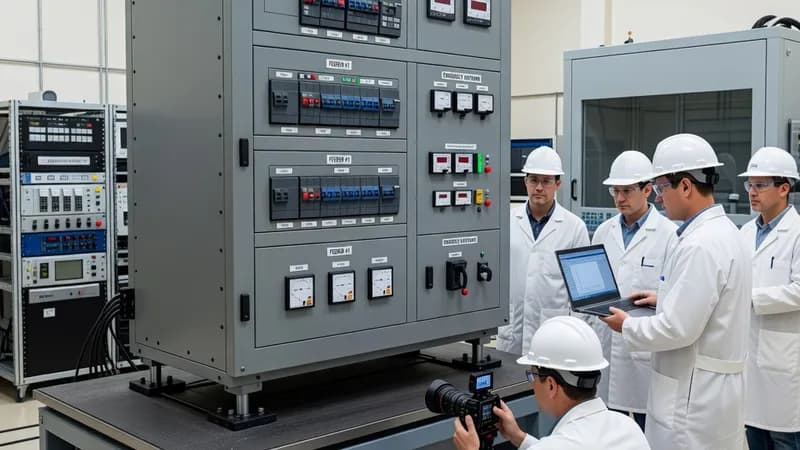
Seismic Qualification for Motor Control Center (MCC) assemblies is a specialized design and verification pathway for facilities that must remain operational after an earthquake. For MCCs used in power distribution and motor control, compliance is typically demonstrated through a combination of engineering analysis, shake-table testing, anchorage design, and documented manufacturing controls aligned with IEEE 693 and applicable IBC seismic provisions. The objective is not simply survival of the enclosure, but maintained function of critical components such as MCCBs, contactors, overload relays, feeder units, VFDs, soft starters, protection relays, busbar systems, control wiring, and operator interfaces after a defined seismic event. IEEE 693 provides the primary seismic qualification framework for substations and industrial electrical equipment, including high and very high seismic levels depending on the project requirement. In practice, MCC seismic qualification is often paired with the International Building Code (IBC) and local structural codes to confirm anchorage loads, floor interface requirements, and building interaction. For engineered assemblies, compliance may require testing of the complete MCC lineup or a representative qualified configuration, with attention to cabinet mass, center of gravity, base frame stiffness, door latching, internal component bracing, and busbar support spacing. The verification package should clearly state the qualified arrangement, seismic zone, mounting method, and any restrictions on field modifications. Design considerations start with mechanical robustness. Enclosures are typically reinforced to control resonance and prevent distortion of doors, vertical sections, and withdrawable units. Internal assemblies may require anti-loosening hardware, captive fasteners, cable management with strain relief, and secure termination of control wiring. Busbar systems must be assessed for short-circuit withstand and mechanical support under dynamic loading, while components such as ACBs, MCCBs, and intelligent relays should be selected from manufacturer platforms that can be mounted and braced consistently across the tested design. Where VFDs or PLC-based control modules are included, vibration-sensitive electronics and cooling systems need particular attention. Testing and documentation are central to the compliance pathway. A qualified MCC program normally includes a seismic test report, test setup drawings, anchorage calculations, component list, as-built bill of materials, and installation instructions that define bolt sizes, torque values, floor flatness tolerances, and allowable cabinet interconnections. For projects requiring formal evidence, certification may be available on request through third-party laboratories or manufacturer-supported verification files. Maintenance of compliance is equally important: replacement of major components, alteration of bus arrangements, changes to enclosure height, or modifications to anchorage must be reviewed against the original qualified configuration. For EPC contractors, OEMs, and facility owners serving utilities, petrochemical plants, water treatment sites, data centers, and essential public infrastructure, seismic-qualified MCCs are a risk-reduction measure that supports resilience and business continuity. A properly engineered MCC can meet demanding seismic expectations while still maintaining IEC 61439 assembly integrity, thermal performance, and serviceability.
Key Features
- Seismic Qualification (IEEE 693/IBC) compliance pathway for Motor Control Center (MCC)
- Design verification and testing requirements
- Documentation and certification procedures
- Component selection for standard compliance
- Ongoing compliance maintenance and re-certification
Specifications
| Property | Value |
|---|---|
| Panel Type | Motor Control Center (MCC) |
| Standard | Seismic Qualification (IEEE 693/IBC) |
| Compliance | Design verified |
| Certification | Available on request |
Other Standards for Motor Control Center (MCC)
Power switchgear and controlgear assemblies — main compliance standard
Explosive atmosphere compliance for hazardous areas
Type approval for marine and offshore installations
Internal arc classification and containment
North American switchboard safety standards
Other Panels Certified to Seismic Qualification (IEEE 693/IBC)
Primary power distribution from transformer to sub-circuits. Rated up to 6300A. Houses main incoming breaker, bus-section, and outgoing feeders.
High-capacity power distribution for industrial facilities. Controls and distributes incoming power to MCC, APFC, and downstream loads.
Automatic changeover between mains and generator/UPS. Open or closed transition, with or without bypass.
Genset start/stop sequencing, synchronization, load sharing, and paralleling controls.
Prefabricated busbar distribution per IEC 61439-6. Sandwich or air-insulated, aluminum or copper.
Bespoke panel assemblies for non-standard requirements — special ratings, unusual form factors, multi-function combinations.
Frequently Asked Questions
Ready to Engineer Your Next Panel?
Our team of electrical engineers is ready to design, build, and deliver your custom panel solution — fully compliant with international standards.