Surge Protection Devices (SPD)
Type 1/2/3 surge arresters, coordination, monitoring
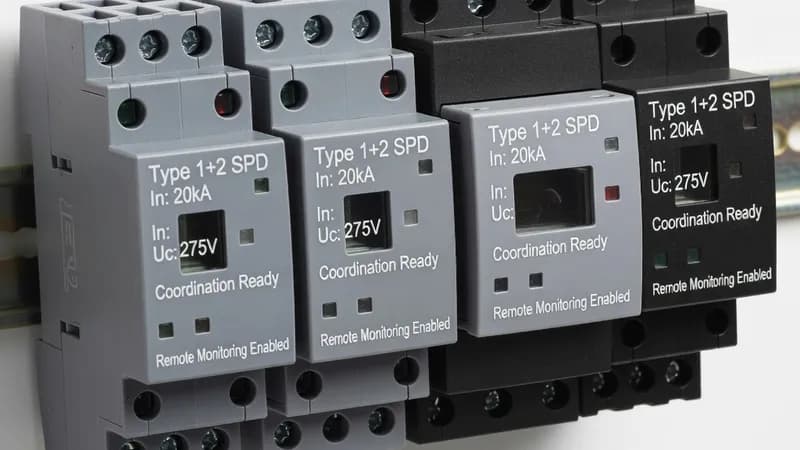
Surge Protection Devices (SPDs) are essential protective components in IEC 61439 low-voltage switchgear and controlgear assemblies, limiting transient overvoltages generated by lightning-induced surges, utility switching, capacitor bank operations, motor starting, and faults on upstream networks. In practical panel engineering, SPDs are selected and coordinated as a layered protection system in accordance with IEC 61643-11 for LV surge protective devices and installed to complement the insulation coordination principles of IEC 60364 and the assembly requirements of IEC 61439-1 and IEC 61439-2. Type 1 devices are used at the service entrance, typically in main distribution boards, power control centers, and busbar trunking inlets, where the expected impulse current is defined by Iimp ratings such as 12.5 kA, 25 kA, or higher per pole depending on lightning exposure and earthing arrangement. Type 2 SPDs are the most common in downstream distribution boards, metering panels, and lighting distribution boards, with nominal discharge current In values often in the 5 kA to 20 kA range and voltage protection levels optimized to protect MCCBs, contactors, PLCs, power supplies, and metering electronics. Type 3 devices are installed close to sensitive loads, including variable frequency drives, soft starters, protection relays, automation panels, and DC distribution circuits, where low Up values and short lead lengths are critical. Coordination is a major engineering requirement. Proper cascading between Type 1, Type 2, and Type 3 SPDs reduces residual overvoltage and prevents premature failure. Panel builders must verify maximum continuous operating voltage Uc, temporary overvoltage withstand, upstream backup protection, and short-circuit withstand capability when SPDs are connected ahead of or in parallel with ACBs, MCCBs, fused switch disconnectors, or busbar systems. Many modern SPD families from Schneider Electric Acti9 iPRD, ABB OVR, Siemens 5SD7, Eaton Moeller, Dehnguard, Phoenix Contact VAL, and OBO Bettermann V series include pluggable cartridges, remote alarm contacts, and thermal disconnection for safe end-of-life behavior. For industrial panels, monitored SPDs with dry contacts or communication modules are often preferred so maintenance teams can detect failed modules without opening energized enclosures. Installation quality directly affects performance. In IEC 61439 assemblies, SPD wiring must be as short and straight as possible to minimize inductive voltage drop; excessively long leads can significantly increase the effective protection level. Earthing and bonding must be robust, with low-impedance PE connections and careful consideration of TN-S, TN-C-S, TT, or IT systems. In VFD panels and DC distribution panels, the SPD type must be matched to the system voltage, inverter topology, and expected surge environment. For hazardous-area applications or panels installed near combustible atmospheres, additional requirements may apply under IEC 60079. In demanding industrial sites, surge protection is also used alongside EMC measures and, where necessary, enclosure integrity or arc containment considerations under IEC 61641 for certain enclosed assemblies. For EPC contractors and panel manufacturers, the practical selection criteria are clear: system voltage, earthing scheme, risk level, available short-circuit current, coordination with upstream protective devices, and the criticality of the connected load. Correctly engineered SPDs improve uptime, reduce nuisance failures of digital equipment, and extend the service life of automation and power conversion components across main distribution boards, PCCs, lighting panels, metering panels, busbar trunking systems, custom-engineered panels, and DC boards.
Panels Using This Component
Primary power distribution from transformer to sub-circuits. Rated up to 6300A. Houses main incoming breaker, bus-section, and outgoing feeders.
High-capacity power distribution for industrial facilities. Controls and distributes incoming power to MCC, APFC, and downstream loads.
Enclosed VFD assemblies with input protection, line reactors, EMC filters, output reactors, and bypass options.
Energy metering, power quality analysis, and multi-circuit monitoring with communication gateways.
Final distribution for lighting and small power. MCB/RCBO-based with DALI or KNX integration options.
Prefabricated busbar distribution per IEC 61439-6. Sandwich or air-insulated, aluminum or copper.
Bespoke panel assemblies for non-standard requirements — special ratings, unusual form factors, multi-function combinations.
DC power distribution for battery systems, solar installations, telecom, and UPS applications. MCCB/fuse-based DC protection.
Related Knowledge Articles
Frequently Asked Questions
Ready to Engineer Your Next Panel?
Our team of electrical engineers is ready to design, build, and deliver your custom panel solution — fully compliant with international standards.